





Retail reset: why it’s time to go shopping again
After what has been a challenging decade the retail sector is finally finding its footing again. Years of online disruption, falling capital values and pandemic closures forced a painful, but necessary reset. Recent evidence suggests that retailers and real estate markets have largely adjusted to a structurally different retail environment, putting the sector on a more sustainable footing.
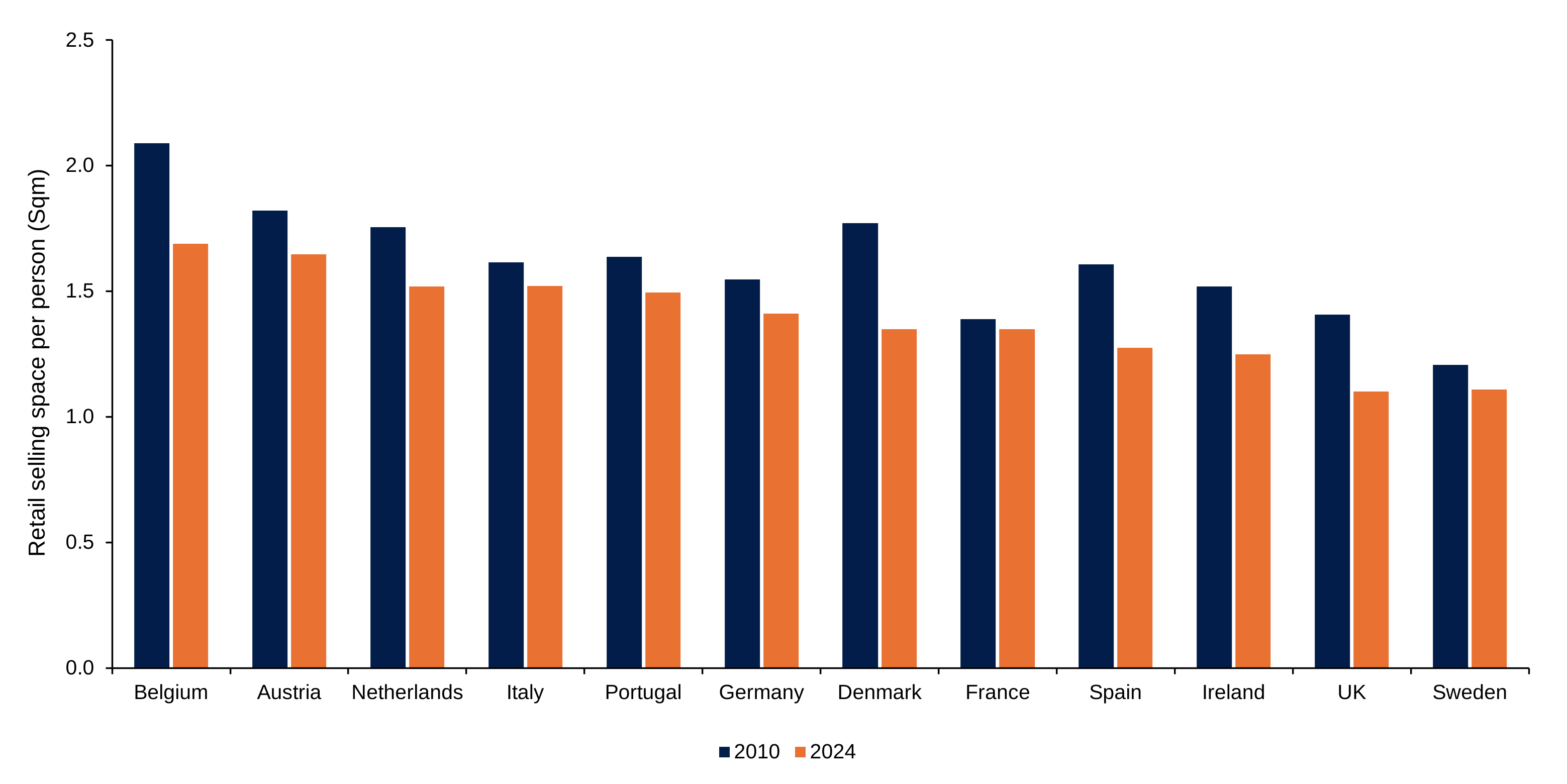
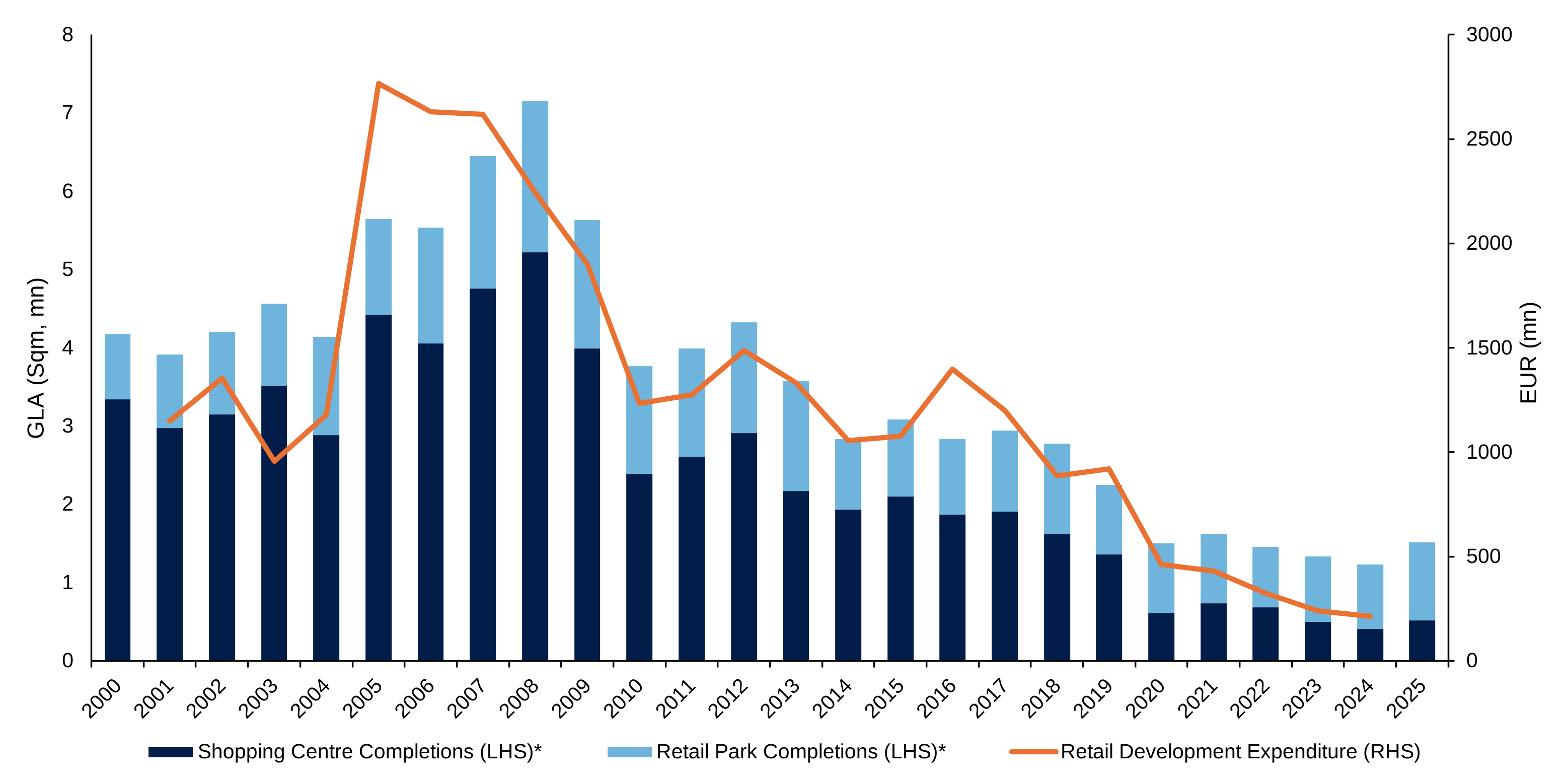
A key fact in this reset has been a shrinking of Europe’s retail footprint (Chart 1). Redundant space has been repurposed – department stores and shopping centres reborn as mixed use office and residential schemes for example – while new development has largely evaporated (Chart 2). What’s more, high construction and financing costs make a resurgence in new supply unlikely, leaving a new, tighter market to set the stage for a more balanced future.
Chart 1: Retail selling space per capita (sqm per person)
Sources: Euromonitor, Oxford Economics, Savills IM (Aug 2025)
Chart 2: Retail completions & development expenditure
Sources: Property Market Analysis LLP (PMA), MSCI, Savills IM (Aug 2025)
A rebasing of rents has helped to create a more sustainable leasing environment. Retailers themselves have become leaner, concentrating on key pitches with high footfall and out-of-town locations with strong accessibility that offer lower operating costs. The result: renewed rental growth for strong units. With supply tightening in strong locations, tenant failures can provide investors with the opportunity to strengthen their tenant mix and lease quality.
Investors still need to be selective. The performance between the top and bottom quartile assets remains stark. And online shopping will keep growing, although its impact is very uneven across countries and subsectors. Moreover, retail isn’t one sector – it’s many. Success depends on understanding different subsector demand dynamics and the right tenant mix to identify durable, income-producing opportunities.
Yes, retail still moves with the economic cycle and consumer spending patterns, so it’s not immune to current political noise and uncertainty. However, the medium-term prospects are supportive. Oxford Economics forecasts European consumer spending to grow by 1.7% per year over the next five years, outpacing the 2000–2024 average of 1.3%.
From a returns perspective, the numbers also justify more than a look in the window. According to the MSCI European Quarterly Index, retail delivered annual total returns just shy of those from the industrial and logistics sector in Q2 2025 and ahead of residential and offices. Suggesting that retail can make a strong contribution to a real estate portfolio again.
With defensive characteristics, low vacancy rates and strong tenant demand, we favour retail parks and grocery-anchored assets. For retail parks we focus on assets with a relatively low fashion tenant mix, are easily accessible with limited nearby competition. Key high streets and dominant shopping centres are also starting to look attractive. Investors’ focus should be on locations and schemes that retain a high-quality tenant mix that supports enduring footfall and importantly, where rents have rebased to more affordable, sustainable levels.
Challenges remain, yet retail’s reset is genuine. With strong income returns and a leaner, more disciplined market, the sector merits renewed attention and a place back on investors’ shopping lists.
*2025 are estimates