







Private credit concerns renew the appeal of secured real estate lending
Europe’s real estate landscape is entering a new phase – one shaped not only by evolving property fundamentals but increasingly by stress signals emerging across the broader credit environment. As underwriting uncertainty and pockets of distress expand, secured real estate lending – characterised by hard collateral, transparent valuations, and disciplined structures – is regaining prominence as a stabilising allocation.
Over the last decade, private credit ballooned rapidly, supported by the hunt for yield and bank retrenchment. But as interest rates rose sharply from 2022 onward, the structural vulnerabilities built up during the boom have become increasingly visible. Debt underwritten at historically low coupons now face refinancing at meaningfully higher yields, compressing coverage ratios and elevating default risk. Covenant-lite structures prevent early intervention, amplifying loss severity when companies become stressed. Recent concerns in the private credit market have prompted many institutional investors and family offices to reassess where true risk-adjusted value lies.
The unease is particularly evident in sponsor-backed corporate lending, where leverage levels remain high and EBITDA adjustments often obscure true cashflow health. Jamie Dimon famously remarked that “there’s never just one cockroach,” and investors are beginning to apply that logic to private credit: isolated issues can be an early sign of deeper, systemic weaknesses. Transparency – already limited in the private credit ecosystem – has resurfaced as a major pain point, with inconsistent reporting and opaque valuation marks making it difficult to gauge real-time portfolio risk.
By contrast, secured real estate lending benefits from a more rigorous and transparent valuation framework. Properties are subject to independent third-party appraisals and regular revaluation cycles. This transparency gives investors clearer visibility into asset-level performance and risk evolution – something corporate credit markets, particularly private credit, struggle to match.
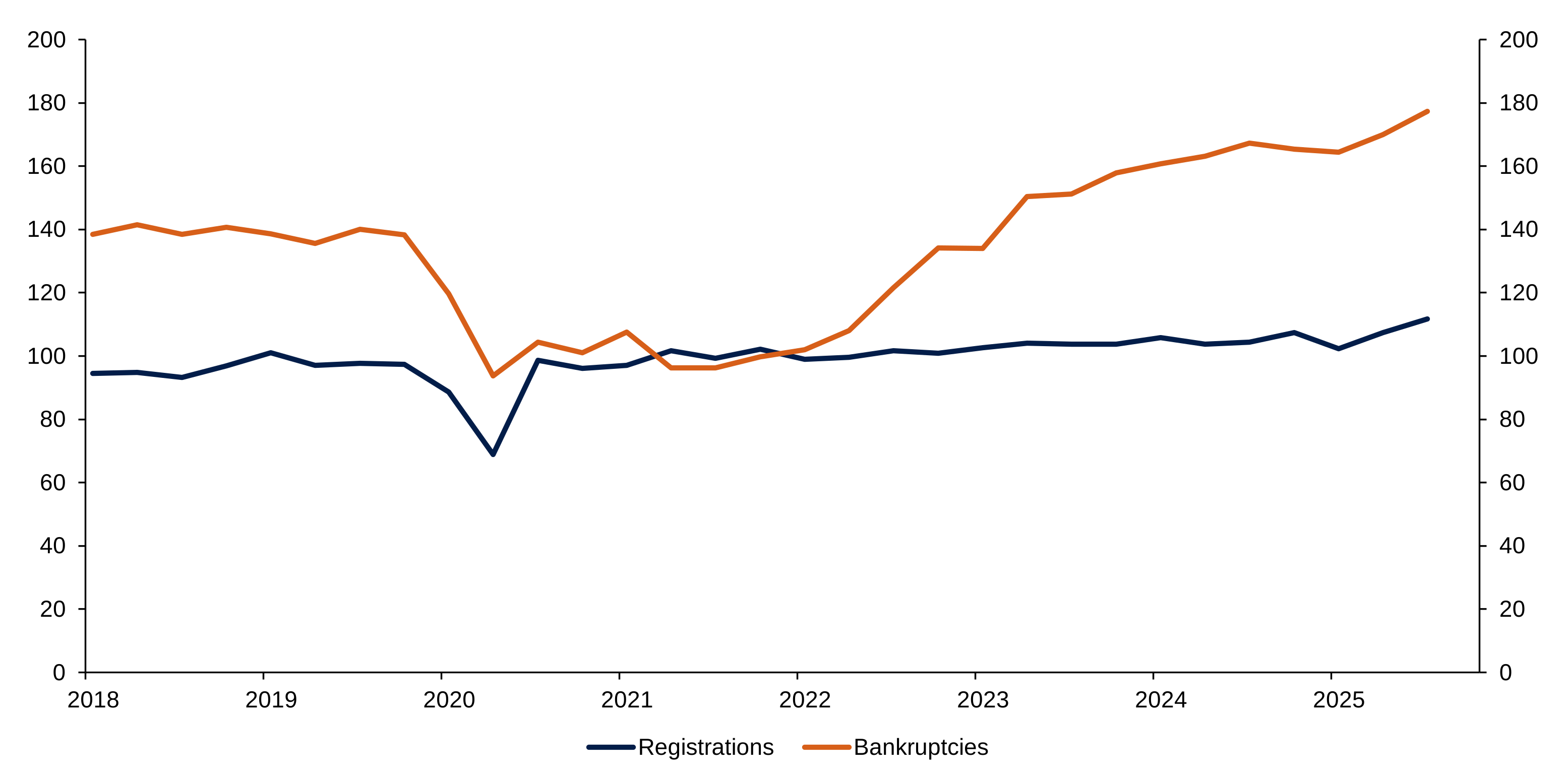
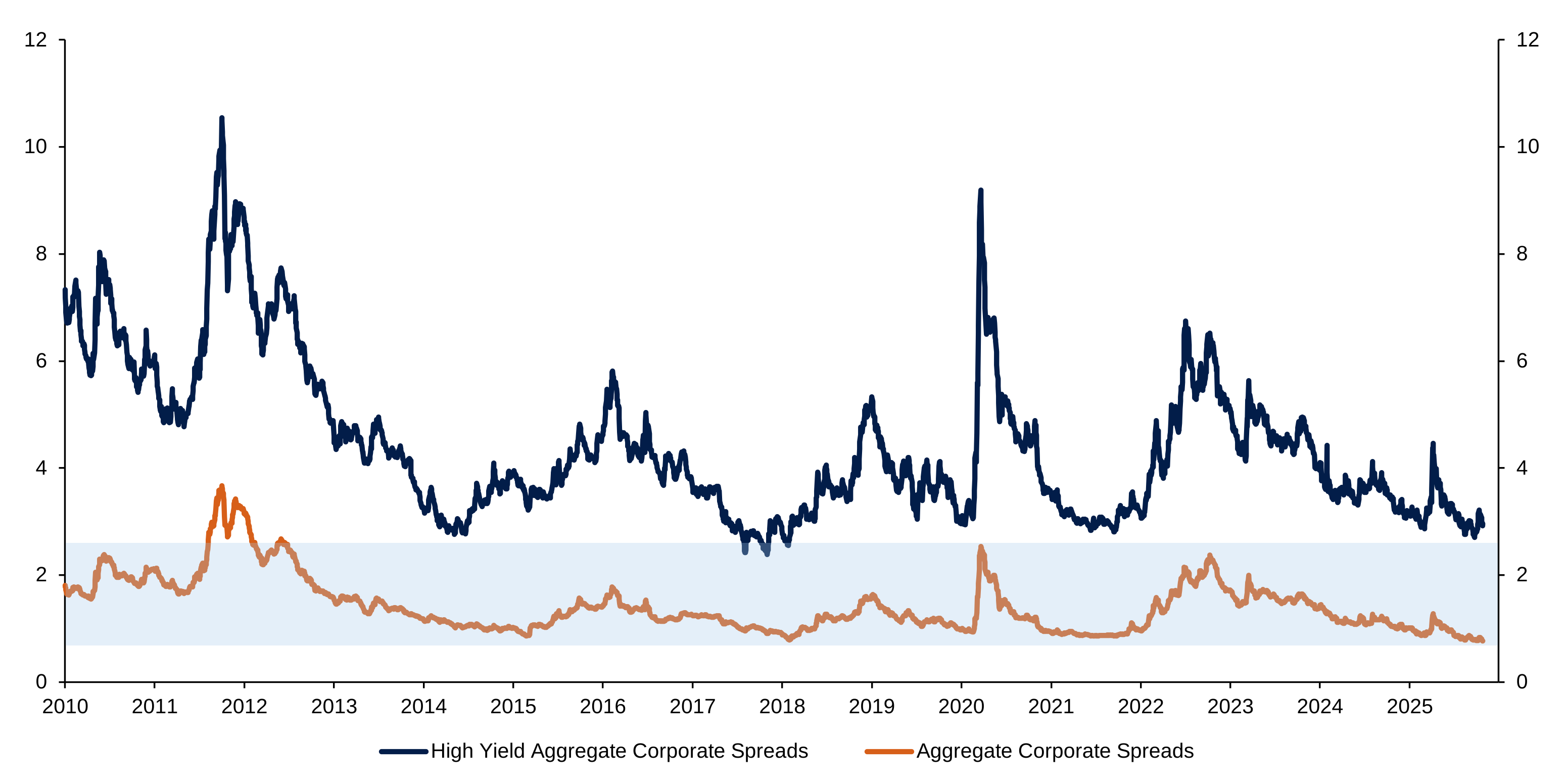
The public credit backdrop also reinforces the relative appeal of real estate lending. Despite heightened macro uncertainty and rising bankruptcies (Chart 1), credit spreads in public corporate bond markets remain historically tight, offering limited compensation for downside risk (Chart 2). When public credit is priced for perfection, and private credit is showing early signs of stress, the relative value of real estate debt becomes increasingly compelling. Secured property loans today often offer wider spreads, stronger covenants, and better structural protections than many corporate credit alternatives.
Chart 1: EU business registrations & bankruptcies (Indexed, 2021=100, seasonally adjusted)
Sources: Eurostat (Nov 2025)
Chart 2: Corporate credit spreads (%)
Sources: Bloomberg (Nov 2025)
Crucially, senior real estate loans are backed by tangible collateral that retains residual value even in stressed scenarios. Recoveries on senior property debt are typically robust, and lenders maintain priority over sale proceeds. In contrast, high credit losses in the private credit market have highlighted the risks in even secured lending against assets that are less tangible than real estate. (think First Brands and Tricolor collapses to name two recent cases).
Real estate lending structures in Europe have also become more conservative since the Global Financial Crisis. Lower loan-tovalue ratios, deeper sponsor equity cushions, and more disciplined underwriting standards enhance resilience. With property markets having repriced, new loans can be underwritten against more realistic asset values, strengthening downside protection.
In addition, banks are still cautious and regulatory capital requirements tightening, leaving a persistent supply-demand imbalance for real estate credit. Non-bank lenders can therefore capture attractive pricing, strong covenants, and favourable terms.
At a time when ‘cockroaches’ are starting to appear in private credit markets and public credit spreads offer limited value, secured real estate lending stands out as a transparent, collateral-backed, yield-rich strategy that is well positioned to deliver attractive risk-adjusted returns.