




Digging deep for alpha
Investors must focus on unlocking value from asset availability, asset selection, and asset enhancement.
The ability to extract value from the front-end of the investment cycle is key to outperformance. Both Japan and Australia show that the front end of the investment cycle is where alpha is built. In Japan, corporate reform is unlocking a wave of motivated selling and repositioning opportunities, while in Australia, the evolution of necessity retail offers scalable, income-backed value creation. In a more selective market environment, outperformance will belong to investors who can identify inefficiency early, execute actively, and buy with conviction before the recovery matures.
Buying well in Japan commercial real estate
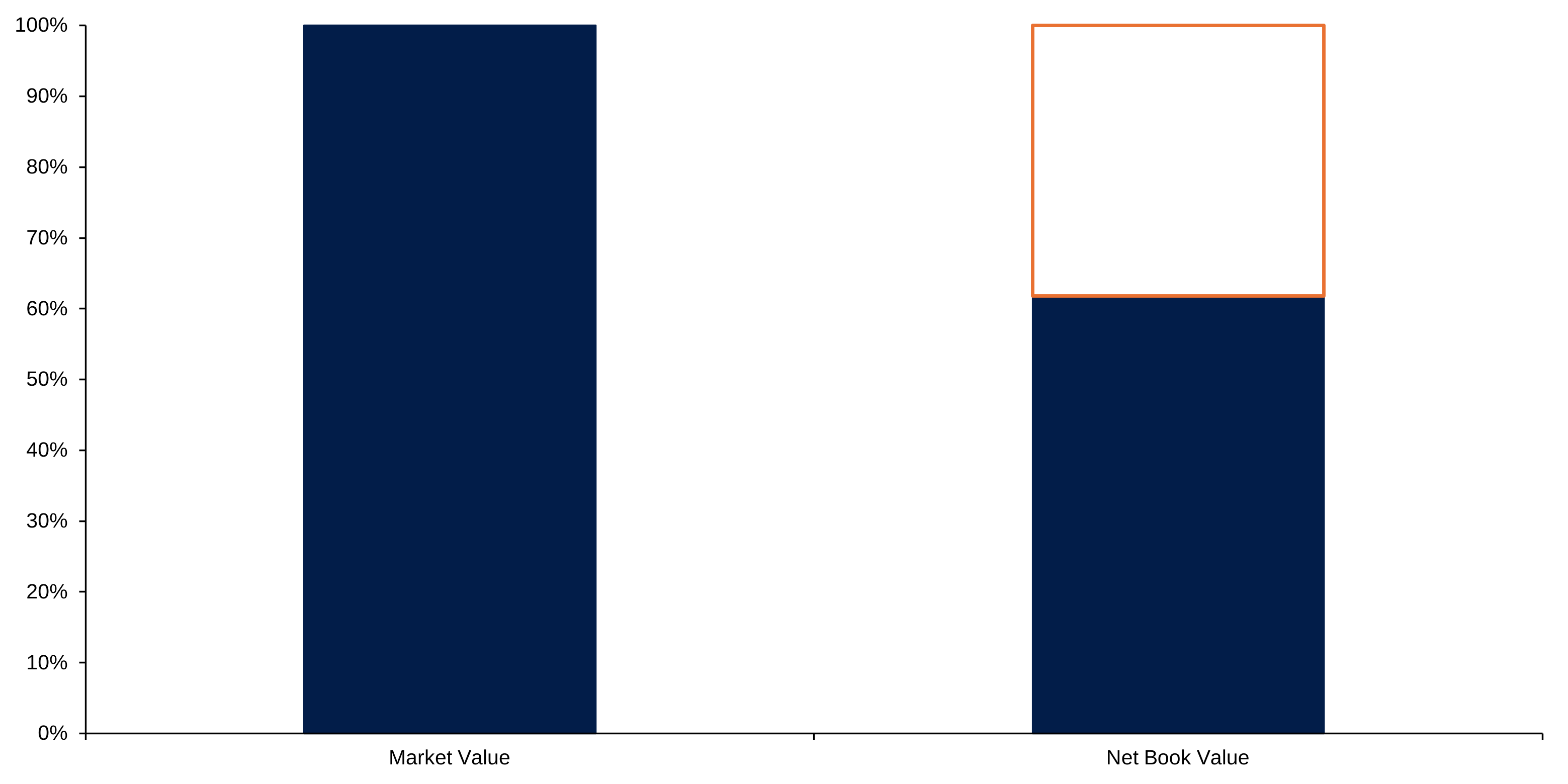
Corporate activism in Japan is gaining momentum. Shareholders are pressuring companies to streamline balance sheets and improve capital efficiency, supported by stronger governance from the Tokyo Stock Exchange and the Financial Services Agency’s 2025 action programme. These reforms are accelerating carve-outs, sale-leasebacks, and portfolio rationalisation, particularly among non-core real estate holdings (Chart 1).
Chart 1: Market vs book value of real estate assts on Japanese balance sheets*
Source: Oxford Economics (Aug 2025)
For investors, this wave of divestment creates a timely “buy well, buy right” opportunity. Companies are moving asset-light, bringing institutional-quality properties to market that are often under-managed rather than distressed. Many divested assets were long held for legacy reasons rather than financial optimization. These assets typically have untapped value through better leasing management, repositioning, or ESG-driven refurbishment.
Timing within the occupier cycle is favourable. The Tokyo office market, for example, has entered an early expansion phase. Grade-A vacancy fell to about 3.6% in the first quarter of 2025 and dropped further to roughly 1.4% in the second, supported by record net absorption as corporate relocations and expansions resumed. Rents are rising across grades, and tenant incentives are narrowing. In this context, acquiring well-located but under-capitalised assets allows investors to ride the upswing through repositioning and leasing recovery.
ESG considerations add another layer of differentiation. Institutional investors are increasingly prioritizing energy efficiency, carbon reduction, and climate resilience. Yet a large portion of Japan’s building stock still lags global benchmarks. This gap creates opportunities for managing-to-green, taking inefficient assets and upgrading them to meet institutional ESG mandates.
Value-add in Australian neighbourhood retail
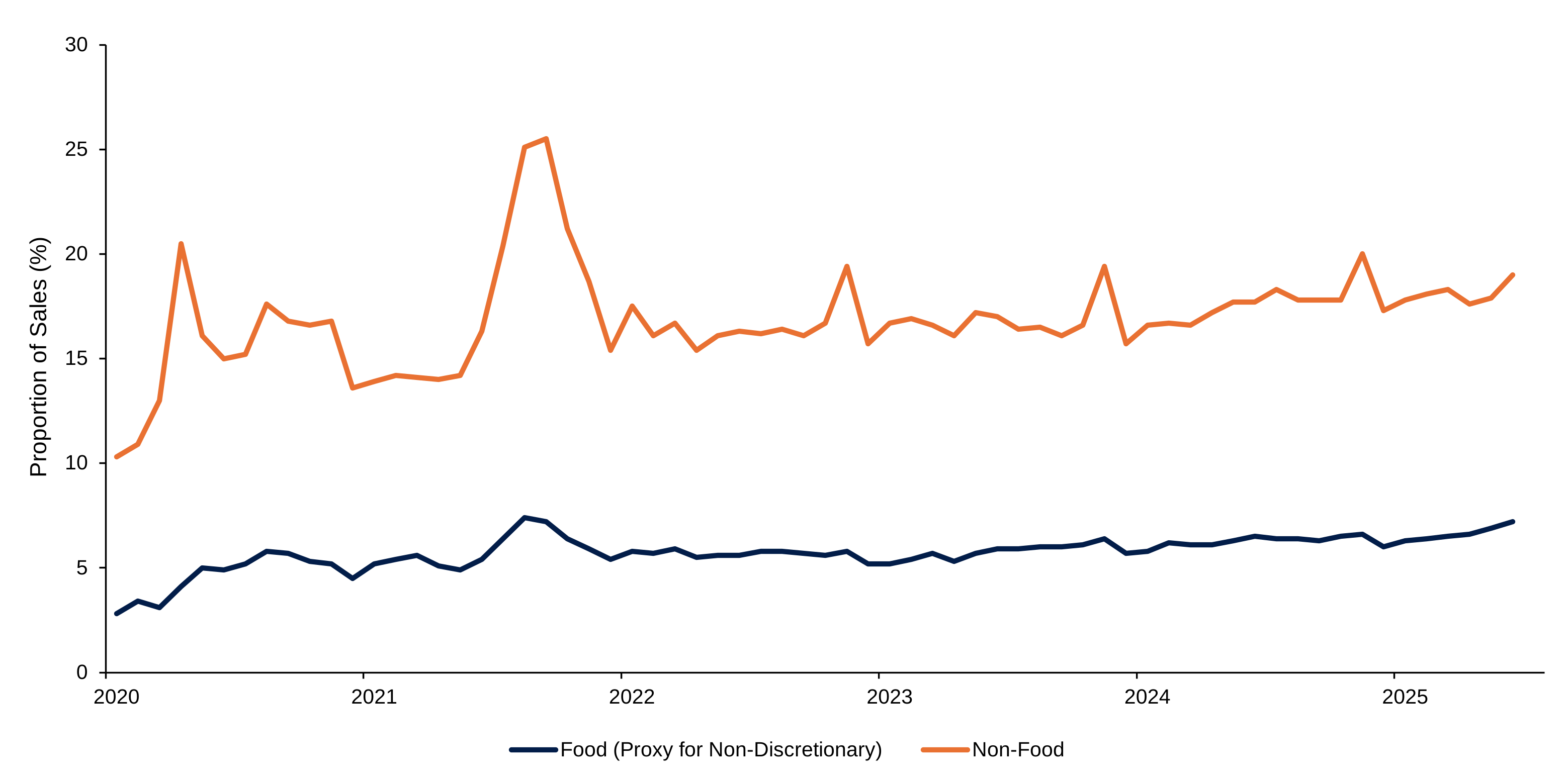
Australia’s neighbourhood retail sector represents a different type of early-cycle value. While discretionary retail has softened, necessity-based neighbourhood centres anchored by supermarkets, pharmacies, and essential services continue to deliver stable cash flow. Groceries alone account for roughly one-third of total retail spend, insulating this segment from cyclical volatility, but only account for around 7% of online retail sales (Chart 2).
Chart 2: Online share of Australian retail sales (%)
Source: Australian Bureau of Statistics (Sep 2025)
These assets also provide multiple avenues for value creation. Many centres sit on large land parcels with surplus or under-used areas that can be redeveloped into complementary uses such as last-mile logistics, healthcare, or residential. As urban populations grow and mixed-use precincts gain traction, these enhancements can drive stronger income growth and long-term capital appreciation.
Following the repricing of 2023, yields on neighbourhood centres have expanded by 50 to 75 basis points, offering better entry points for investors seeking defensive returns with upside potential. Active management, such as reconfiguring layouts, upgrading ESG performance, and integrating new services, is increasingly rewarded by occupiers and consumers.
Policy and planning dynamics add further support. Governments are encouraging urban regeneration and suburban densification, improving the investment rationale for strategically located assets. Institutional capital, both domestic and offshore, is increasing exposure to this sector, viewing it as a reliable inflation hedge backed by non-discretionary demand.
* Value based on hypothetical accounting for real estate assets in Japan corporate balance sheets