





Livin’ la vida glocal
Living sectors in APAC continue to draw global capital while retaining local nuances and realities.
Japan multifamily: Defensive stability underpinned by deep domestic demand Japan’s institutional multifamily sector is the region’s most mature and liquid living asset class.
Decades of urbanization, favourable demographics for rental demand, and changing housing preferences have established a stable renter base that underpins income reliability. The market benefits from a combination of low volatility, high liquidity, and minimal correlation with broader macro cycles. It is particularly appealing to institutional investors seeking resilience in income streams and diversification within their APAC allocations.
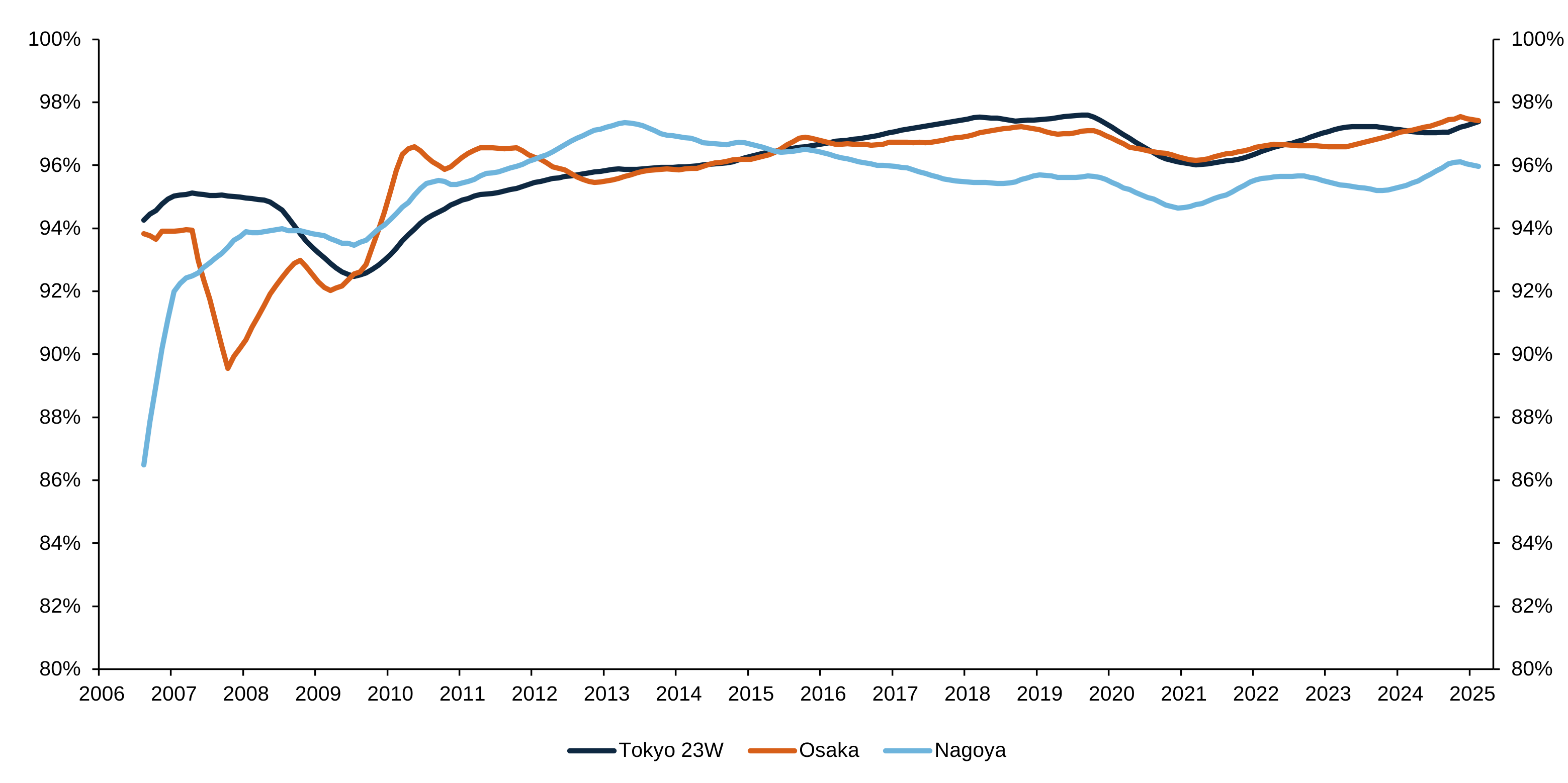
Occupancy rates across Tokyo, Osaka, and Nagoya have remained remarkably stable, consistently near full capacity, hovering above 96% for more than a decade in spite of various periods of macro uncertainty (Chart 1). This resilience reflects the scale and stickiness of domestic rental demand. Rent growth will be supported by wage growth, household formation trends, and intensifying urban migration.
Chart 1: Japan multifamily occupancy rates (6-month moving average)
Source: ARES AJPI (Sep 2025)
Despite the Bank of Japan moving toward monetary normalization, cap rates have remained tight, with little evidence of yield expansion. The domestic investor base remains dominant, and foreign capital continues to flow steadily into the sector, attracted by its defensive profile and relative yield pick-up over government bonds. Japanese multifamily real estate has effectively evolved into an income anchor within global core strategies.
With rising attention on sustainability and liveability, operators are also differentiating through ESG integration, energy efficiency upgrades, and tenant experience, which will shape the next phase of institutional growth.
Australia: Structural growth and the institutionalisation of Build-to-Rent (BTR)
In contrast, Australia’s living sector story is one of structural expansion rather than stability. The BTR segment is rapidly evolving from a niche concept to an increasingly mainstream institutional asset class. Strong population growth, rising rental demand, and an undersupply of quality housing have underpinned the investment thesis for BTR.
Rising urban density, smaller household sizes, and a growing preference for professionally managed rental housing are reshaping tenant expectations. On the supply side, housing completions remain well below household formation. This persistent gap is exacerbated by high construction costs, skilled labour shortages, and planning bottlenecks. Policy tailwinds, such as land tax reforms, depreciation incentives, and foreign investment clarity, have accelerated the sector’s institutionalization. Local superannuation funds and global investors alike are increasing allocations to BTR, viewing it as both a social necessity and a durable income generator.
Purpose-Built Student Accommodation: A complementary growth engine
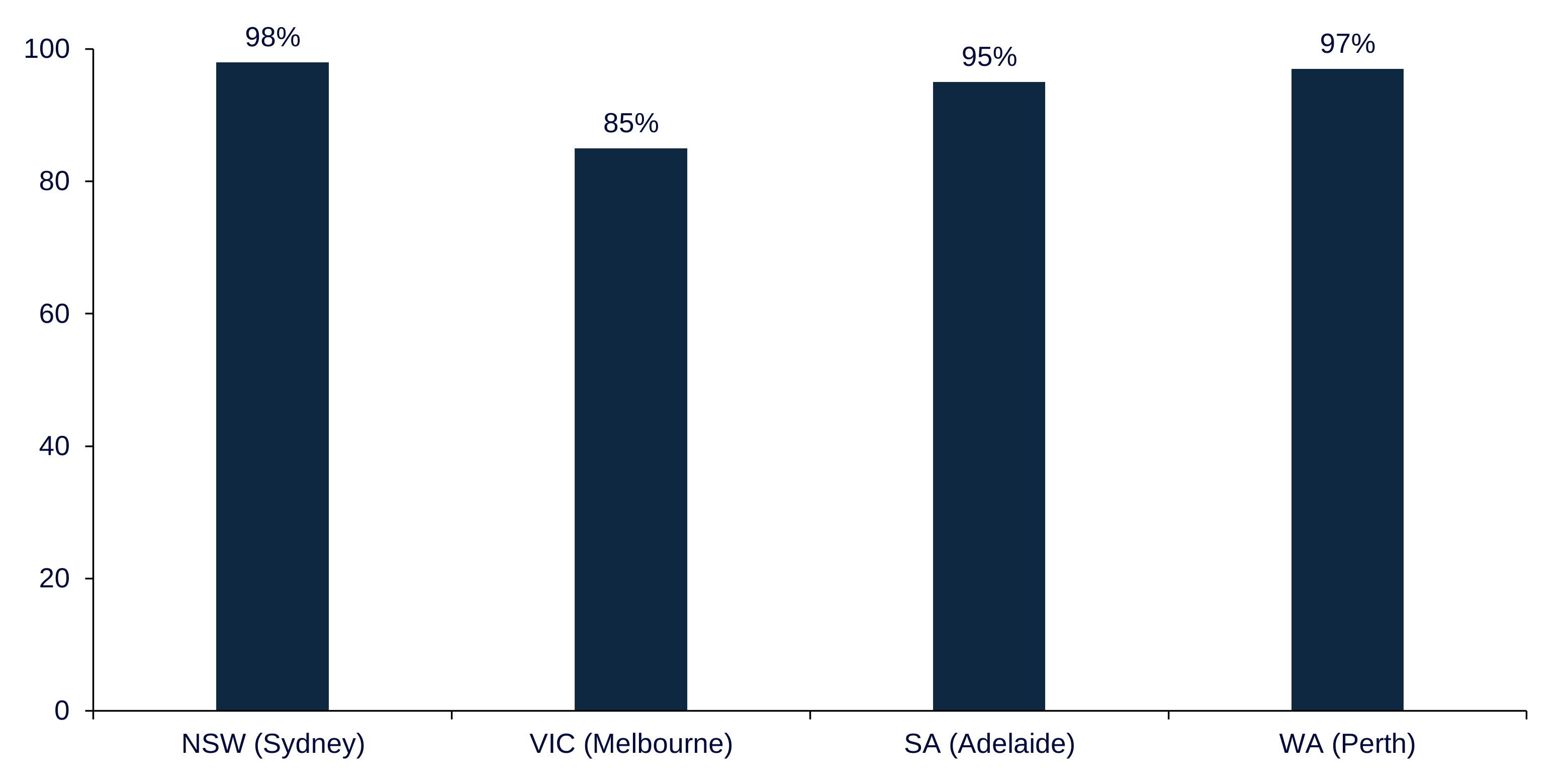
A vital complement to the living story in Australia is Purpose-Built Student Accommodation (PBSA), which has become one of the country’sbest-performing living sub-sectors. Occupancy across major cities is near record highs (Chart 2).
Chart 2: Average Australian PBSA occupancy
Sources: Property Market Analysis LLP (PMA), MSCI (Oct 2025)
The recovery in international student flows, particularly from Asia, has fuelled a resurgence in PBSA demand. Australia remains comparatively affordable relative to peer education hubs such as the United Kingdom and Canada. This cost advantage, combined with supply shortages in prime education precincts, supports the medium-term investment case.
While public debate often suggests that foreign students are exacerbating the rental-housing crunch, the evidence points in a different direction. Research from the Student Accommodation Council (SAC) shows that international students account for just about 6 % of Australia’s total private rental market. Meanwhile, estimates indicate that around half of international students live in PBSA or other specialised student accommodation, rather than competing for generalmarket rentals. This means PBSA is in fact absorbing a portion of student housing demand that might otherwise have entered the broader rental market, thereby freeing up stock for other renters.
Global capital continues to view PBSA as a resilient proxy for broader residential demand, offering attractive entry points through development pipelines and operating partnerships.