





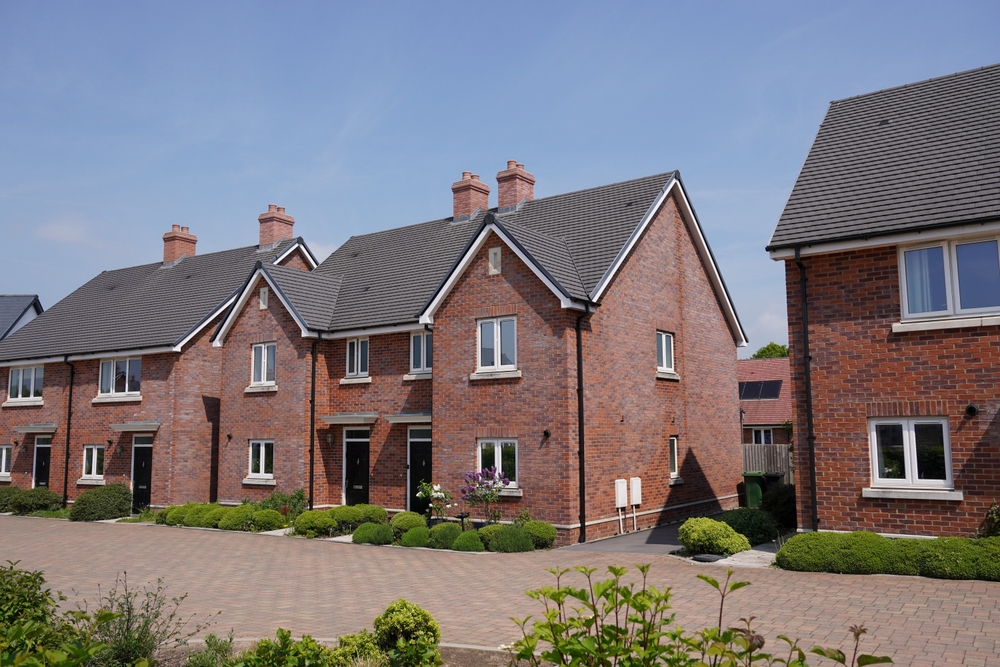

The UK Affordable housing sector provides investors with the opportunity to make a significant social impact, whilst exhibiting a range of compelling investment characteristics. In recent years institutional capital has become more comfortable with allocations to the sector, leading to significant growth in the ‘investment-backed’ or ‘for-profit’ area of the market.
Savills IM’s UK Affordable housing strategy seeks to increase the supply of high-quality affordable housing across the UK and in 2026 Peter Merchant joined the team as Investment Director bringing 28 years of experience in the Affordable housing sector.
Now three months into his role as Investment Director at Savills IM, Peter Merchant talks about the growth of the UK Affordable housing sector, lessons learned and what might be next for investment-backed housing.
1) How has the UK Affordable housing market evolved from its early years?
Although for-profit registered providers (FPRPs) were formally enabled by the Housing and Regeneration Act 2008, uptake in the early years was slow. For much of the period that followed, the model sat at the margins of the affordable housing sector. It was not until the arrival of large-scale, well-capitalised entrants – alongside some smaller early movers – that for-profit provision began to take root in a meaningful way.
Those early years were characterised by ambition and growth plans. The period since has been about proving that those plans could work in practice.
Looking back at 2025, it feels as though we reached a point of maturity for the for-profit part of the sector. We see a growing number of FPRPs moving beyond the start-up phase, pushing through the 1,000-home threshold, securing regulatory gradings, and demonstrating that they can operate at scale within the same regulatory framework as long-established housing associations.
Just as importantly, many others are not far behind. The growth trajectories of several FPRPs suggest that this milestone will be reached by more over the next few years. With that growth comes a shift in focus – from establishing platforms and pipelines to thinking much more deeply about what long-term ownership and stewardship really mean.
One of the advantages of building housing platforms in the current environment is the understanding of what can and cannot be realistically controlled, and to design impact frameworks accordingly. That means focusing on practical outcomes – the performance of service partners, the quality of homes, the experience of residents for example – rather than relying on broad or abstract statements of ambition.
2) What does this increasing maturity mean for the investment-backed part of the market?
As portfolios grow and FPRPs mature, impact becomes less about these intended outcomes and more about execution.
What matters is not just how many homes are delivered, but how investment-backed providers approach ongoing asset management with considerations around; how safe the homes are, the ongoing maintenance of homes, processing resident service and feedback, and how effectively assets are stewarded for the long term.
There is also a growing recognition that impact strategies and business plans need to evolve together as early assumptions now give way to lived operational experience. Governance, data, systems and asset management approaches need to be refined as portfolios move from growth into long-term operation.
3) What lessons are there to be learned from what has come before in Affordable housing?
In conversations with colleagues from not-for-profit housing associations – particularly those managing large amounts of older housing stock – a fair and important point is often raised: FPRPs, by virtue of their relative youth, are not yet exposed to the same challenges associated with ageing stock and the scale of reinvestment that it demands.
That observation is entirely valid. But it also raises a useful question: not whether these challenges will arise, but how well-prepared organisations will be when they do.
This leads me to a question I often come back to: if you were starting a housing association from scratch today, how would you do it?
Starting from scratch does not just mean with new homes. It means starting with systems, data and approaches informed with the benefit of hindsight. It means embedding long-term asset management, understanding future liabilities, and designing customer services around residents rather than legacy structures.
In that sense, the relative youth of the for-profit sector is becoming less about what it lacks and more about what it enables. Although the conversation about maturity is not yet finished, it feels less relevant than it once did. Starting without legacy stock or systems allows organisations to approach asset management, data and customer services with fresh thinking – while meeting the same regulatory and consumer expectations. FPRPs are in a unique position to contribute new ideas back into a sector that has always evolved through shared expertise, while beginning on the foundations of lessons learnt.
4) How do you see the relationship between ‘for profit’ and ‘not for profit’ providers?
One of the things that consistently stands out when speaking with colleagues across social housing is just how collaborative the sector already is. Not-for-profit housing associations have long shared knowledge, supported one another and worked collectively and with stakeholders to improve standards for residents. That culture is a real strength and something that should be recognised.
As for-profit providers mature, the opportunity is not to change that culture, but to become a more established part of it. In practice, the regulatory expectations, the responsibilities to residents, and the operational challenges faced are often very similar, regardless of capital structure.
Rather than framing discussions around “for-profit versus not-for-profit”, it increasingly feels more productive to focus on shared outcomes and a collective goal; delivering and sustaining good quality, affordable homes at scale.
5) How do you think the way the market sees ‘for profit’ providers will evolve in the future?
It increasingly feels like the term “for-profit registered provider” is becoming unsatisfactory. It describes a funding structure, but says very little about purpose, stewardship or how homes are experienced by residents.
Yes, investment-backed providers are accountable to investors, many of whom are UK pension savers and often have a long history of lending in the sector. But that sits alongside (and does not override) a long-term responsibility to residents and communities.
For most organisations operating in this space, the aim is not to replace existing models, but to complement them by bringing additional capacity, capital and capability into a system under significant strain.
As the sector continues to evolve, it may be worth asking whether our language should evolve with it – away from labels that emphasise difference, and towards those that reflect outcomes and responsibilities.
Looking ahead, I am optimistic. The collaborative foundations of the social housing sector are strong, and the growing maturity of investment-backed providers adds another dimension to that collective effort. The coming years will bring challenges, but also opportunities to learn from one another and continue improving how we provide safe, affordable homes for those who need them.